
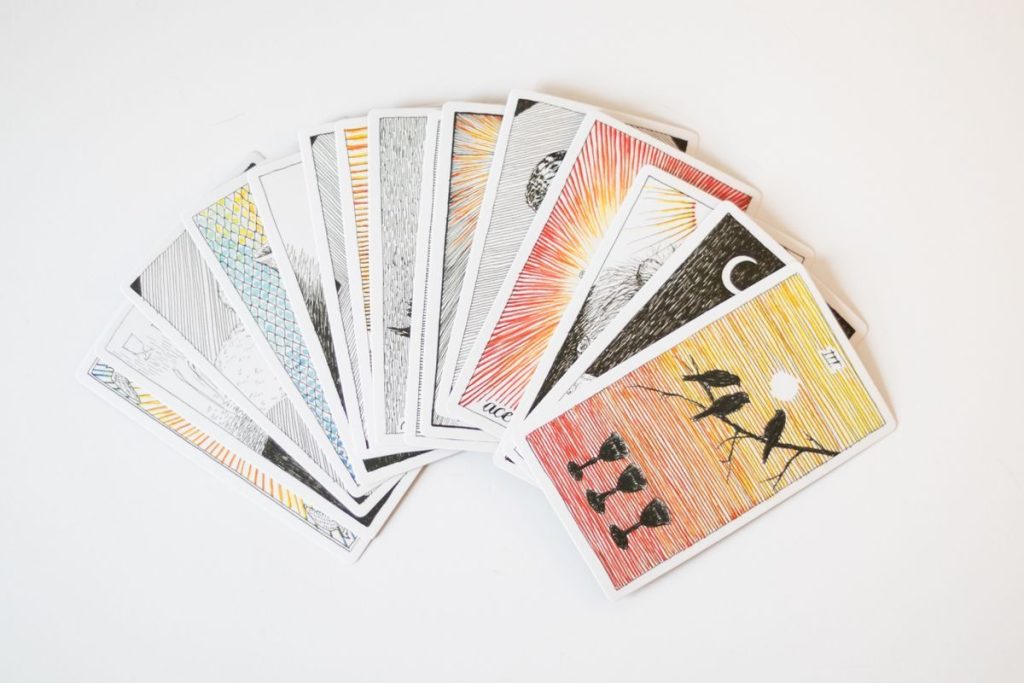
There’s no rule in tarot that says you can only read once a month, and no rule that says you can read every hour. Still, frequency matters. Read too rarely and the cards never become a habit you can learn from. Read too often and every answer gets drowned out by the next one. This guide offers practical rhythms for different kinds of questions, and the signs that it’s time to put the deck down for a bit.
The basic principle: one reading per question, per change
The most useful rule is simple. Ask a question once. Then wait until something has changed before asking it again. “Something has changed” can be a conversation, a decision, new information, or just enough time passing for things to move. If nothing has changed, a new reading is likely to repeat the old one with more confusion.
Suggested rhythms by question type
| Question type | Suggested frequency | Format |
|---|---|---|
| Daily reflection | Once a day | One card |
| Weekly planning | Once a week | Three to five cards |
| A love question | Every one to two weeks, or after a real development | Three to four cards |
| A career or money decision | Once before deciding, then once after a key event | Three to five cards |
| A big life question | Every one to three months | Larger spread |
| Yes or no | Once per question | One card |
Daily cards
A single card each day is the easiest habit to keep and a great way to learn. It isn’t a prediction so much as a theme to notice. The free daily tarot card on Tarotell.me is built for this, and our guide on what your daily tarot card is telling you explains how to read it. One daily card doesn’t count as “reading too often”, because each day asks a new question.
Weekly readings
Many people like a short spread on Sunday evening or Monday morning to set a focus for the week. Our weekly tarot reading spread uses five cards and takes about ten minutes.
Love questions
This is where people over-read most. When you’re anxious about someone, it’s tempting to check the cards after every message or silence. Feelings and situations rarely shift that fast. Ask once, take the advice, and give it at least a week. If you’re stuck in a loop, our guide to mixed signals tarot may help you understand why.
Career and money
Read once before a decision, act, then read again after a key event such as an interview or a conversation about pay. That rhythm keeps the cards tied to real milestones.
Signs you’re reading too often
- You ask the same question several times a day.
- You keep drawing until you get a card you like.
- Readings make you more anxious, not less.
- You’ve stopped making small choices without checking the cards first.
- You can’t remember what yesterday’s reading said because there have been five since.
If two or more of these sound familiar, take a short break. A week without readings often brings back the clarity that frequent pulls were drowning out.
Why repeated readings muddy the answer
Each reading is a snapshot of how you see the question at that moment. When you ask again straight away, you’re no longer asking the original question. You’re asking “Was the last answer right?”, often with a hope of a different result. The new cards respond to that anxiety. The result is a pile of contradicting readings and no clear direction. Our article on what to do after a tarot reading suggests what to do instead of re-asking.
Follow-ups versus new readings
There’s a middle path. If a reading raised a new question, ask a follow-up about the cards you already have rather than starting over. For example:
- “What does the obstacle card suggest I do?”
- “How does the advice card apply to the conversation I’m planning?”
Follow-ups deepen a reading without throwing it away. Tarotell.me supports this directly: you can keep asking about the same cards, and the app only suggests a fresh draw when your question has truly changed. Try it with a free tarot reading.
How often to read for someone else
If friends ask you for readings, the same rules apply. One reading per question, then let them live with it. Reading repeatedly for one person can create dependence. It’s kinder to encourage them to act on the first reading and come back when something has moved.
When reading less is the better choice
There are times when stepping away from tarot is more useful than any spread. Consider a pause if:
- You’re in the middle of a crisis. During a breakup, a job loss or a family emergency, emotions are loud and every card can look like a disaster. Lean on people first, cards later.
- You already know what you need to do. If the answer is clear and you’re reading to delay acting, the next step is action, not another spread.
- The same theme keeps coming up. If every reading for a month says “talk to them” or “rest”, the cards have said what they have to say.
- You’re using readings to sleep. Late-night readings when anxious tend to amplify worry. A gentler ritual like our five-minute evening tarot ritual uses one card for reflection, not for answers.
A short break isn’t giving up on tarot. Most regular readers take one now and then and come back with fresher eyes.
An example of a healthy rhythm
Here’s how one month might look for someone who is dating and job hunting at the same time:
- Every morning: one daily card, noted in a phone app.
- Week 1: a three-card reading on the new relationship after the second date.
- Week 2: a career reading before sending applications.
- Week 3: a follow-up career reading after an interview invitation.
- Week 4: a relationship reading after a real conversation about what they both want, plus a look back at the month’s notes.
Four focused readings and a daily card is plenty. Each one is tied to a real event, so each one has something new to say.
Building a sustainable routine
A routine that works for many people looks like this:
- One daily card, morning or evening. See morning or evening tarot draw for which suits you.
- One weekly spread for planning.
- Occasional focused readings for specific questions, spaced by real events.
- A monthly look back at your notes.
That’s enough to keep tarot useful without letting it take over your decisions.
Have a question on your mind? Ask it in your own words, choose your cards from the 1909 deck and get a free reading written for your situation.
Frequently asked questions
Is it bad to do a tarot reading every day?
A daily single card is fine and helps you learn. Asking the same big question every day is what tends to cause confusion.
How long should I wait to ask the same question again?
Until something has changed. For most love and career questions, that’s one to two weeks at minimum.
Can I do several readings in one day on different topics?
Yes, as long as each one is a genuinely different question. Keep notes so they don’t blur together.
What if the second reading contradicts the first?
Go back to the first one. It answered the original question; the second was likely answering your doubt about it.
Should I read at a specific time?
Any time works. What matters is being calm enough to focus on one question.