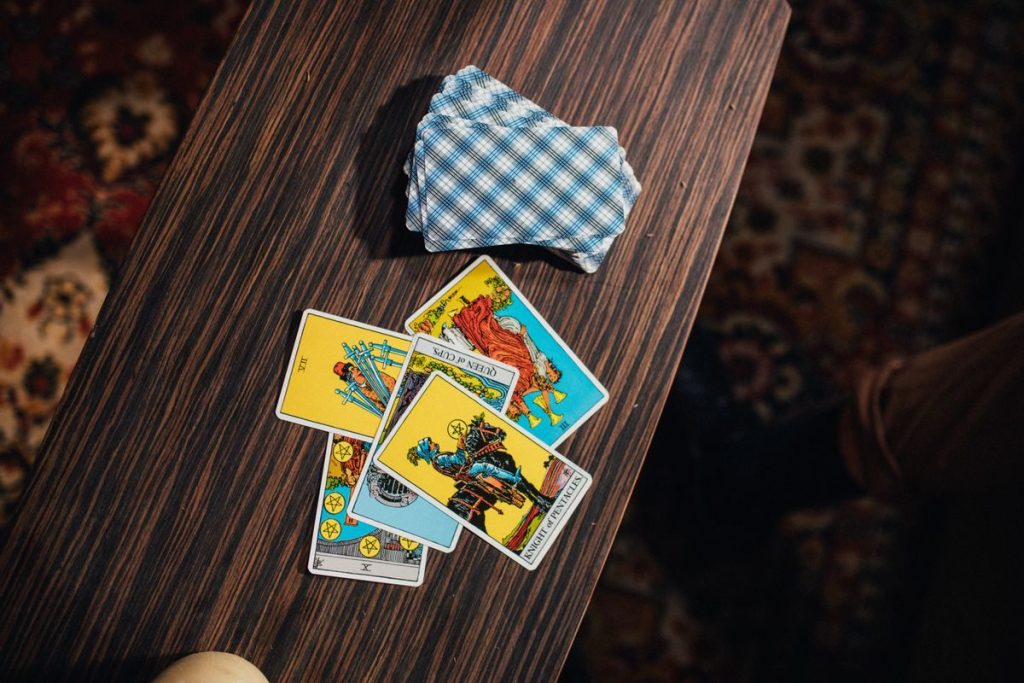

Some people draw a tarot card with their first coffee. Others pull one before bed as the house goes quiet. Both habits are popular, and both work. They just do different things. A morning draw sets a direction for the day ahead; an evening draw helps you understand the day you’ve had. This guide compares the two, suggests which might suit you, and gives a simple routine for each, plus a way to combine them.
The morning draw
A morning card works like an intention. You draw it before the day starts and carry its theme with you.
Benefits
- Gives your day a focus.
- Helps you notice the card’s theme as it shows up.
- Can prompt small, useful actions, like sending a message or taking a break.
- Your mind is usually fresher and less emotional.
Drawbacks
- A hard card can colour your mood if you over-read it.
- Busy mornings can turn it into a rushed ritual.
A simple morning routine
- Before checking your phone, take three slow breaths.
- Draw one card, or flip the free daily tarot card.
- Ask: “What’s one way this card could show up today?”
- Write one keyword in your notes.
Total time: about two minutes. For more on reading it, see what your daily tarot card is telling you.
The evening draw
An evening card works like a reflection. You draw it after the day is done and use it to make sense of what happened, or to wind down.
Benefits
- Helps you process the day’s events.
- Encourages gratitude and noticing what went well.
- Can be part of a calming bedtime routine.
- You have the full day’s context to connect the card to.
Drawbacks
- When tired or anxious, it’s easy to read a card more darkly than it deserves.
- Big questions late at night can feed worry and disturb sleep.
A simple evening routine
- Settle somewhere quiet. Dim the lights if you like.
- Draw one card.
- Ask: “What did today teach me?” or “What do I need to let go of before sleep?”
- Write one sentence.
We go deeper into this in tonight’s card: a five-minute evening tarot ritual.
Which suits you?
| If you… | Try |
|---|---|
| Like to plan and set intentions | Morning |
| Prefer reflecting on what happened | Evening |
| Feel anxious at night | Morning (avoid late readings) |
| Rush in the mornings | Evening |
| Want to learn card meanings fast | Both, with a short log |
| Want a calming bedtime ritual | Evening, with a gentle question |
The best of both: morning card, evening check
A popular approach combines them. Draw one card in the morning. In the evening, without drawing again, look back at it and ask: “Where did I see this card today?”
This has a few advantages:
- You learn card meanings by seeing them in real life.
- You avoid two separate readings pulling in different directions.
- You build a habit of noticing patterns.
After a few weeks, you’ll have a log of cards with real examples, which makes tarot much easier to read.
Examples of a morning card in evening review
- Morning: Five of Wands. Evening: “There was a tense meeting about deadlines. I stayed calm.”
- Morning: Page of Cups. Evening: “An old friend sent a sweet message out of nowhere.”
- Morning: Four of Swords. Evening: “I didn’t rest, and I felt drained by 4pm. Lesson learned.”
- Morning: Six of Pentacles. Evening: “I helped a colleague, and someone bought me lunch.”
Questions for each time of day
Having a set question makes the habit easier. Some options:
Morning questions
- What energy should I bring to today?
- What should I pay attention to?
- What’s one thing I can do well today?
Evening questions
- What did today teach me?
- What can I let go of before sleep?
- What am I grateful for from today?
Pick one and stick with it for a couple of weeks. Changing the question every day makes it harder to see patterns.
What if your schedule changes?
Shift workers, parents of young children and people who travel often don’t have predictable mornings or evenings. That’s fine. Link the draw to something you do every day anyway, like your first meal, your commute, or brushing your teeth. The cue matters more than the clock. If your days vary a lot, the evening-review approach is especially forgiving: you can draw whenever the day starts for you and look back whenever it ends.
Weekly instead of daily
If a daily card feels like too much, try a weekly reading instead. A short Sunday or Monday spread can do the work of seven daily cards. See weekly tarot reading: a simple Sunday spread.
Tips for either time
- Keep it short. A daily card is a quick ritual, not a full reading.
- Don’t redraw. Work with the card you get.
- Use the same time each day. Habits stick better with a consistent cue.
- Save big questions for proper spreads. If something important is on your mind, use a free tarot reading rather than loading it onto a daily card.
Daily cards for focus areas
Whichever time you choose, you can give the card a focus. In the morning, “What do I need for work today?” works well. See daily tarot for work. In the evening, “What did today show me about my relationships?” works well. See love tarot card of the day.
Make it a habit: flip your card of the day. It takes ten seconds and earns a free credit.
Frequently asked questions
Is it better to read tarot in the morning or at night?
Both work. Morning suits intention-setting; evening suits reflection. Choose what fits your routine and mood.
Can I do both a morning and evening draw?
You can, but many people prefer one morning card reviewed in the evening, to avoid conflicting readings.
Is it bad to read tarot before bed?
Not if it’s calming. Avoid heavy questions late at night if they make you anxious.
How long should a daily draw take?
One to five minutes is plenty.
What if I forget to draw my card?
No problem. Draw it when you remember, or skip the day. Consistency matters more than perfection.