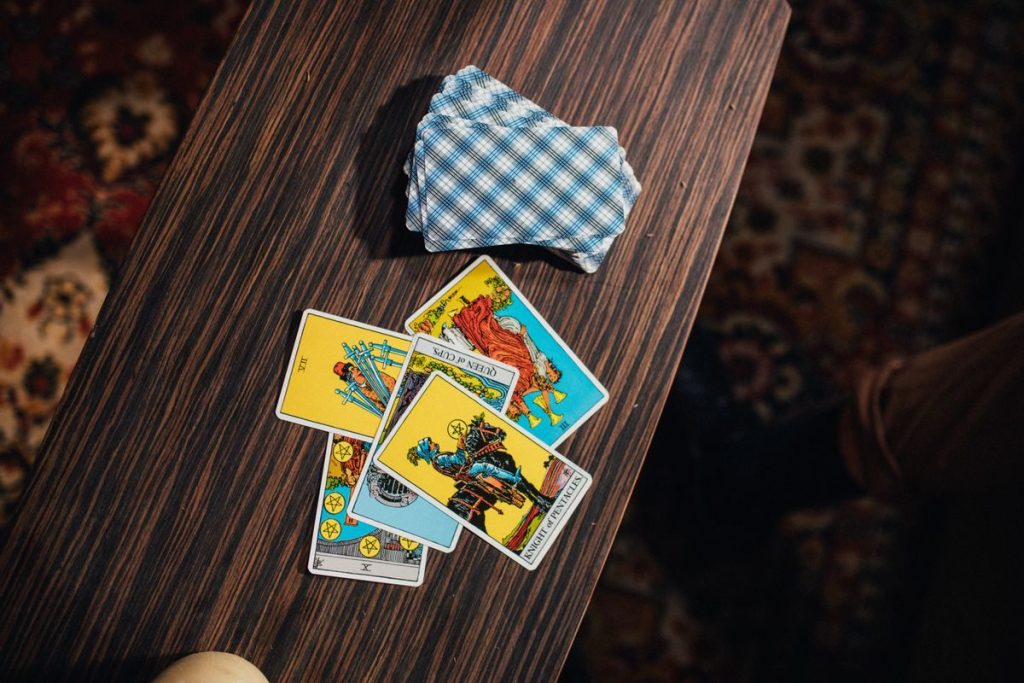

“Does he like me?” “Will she call?” “Should I ask them out?” Love questions often feel like they need a simple yes or no. A one-card yes or no reading is quick and clear, which makes it a popular way to check in on romantic choices. It also has limits, especially when the question involves someone else’s feelings. This guide explains how to get useful yes or no answers about love, which cards lean which way, and when to switch to a fuller reading.
How yes or no tarot works
You ask a closed question, shuffle, and draw one card. Each card leans yes, no or maybe based on its traditional meaning:
- Bright, forward-moving cards lean yes.
- Heavy, blocked or ending cards lean no.
- Cards about waiting, choices or confusion lean maybe or not yet.
Our full lists are in yes or no meanings for the Major Arcana and yes or no meanings for the Minor Arcana. Or try the free yes or no tarot on Tarotell.me, which gives you the answer plus a short explanation for your question.

Phrasing love questions well
Yes or no works best when the question is about a choice or a clear event, ideally your own.
| Harder to answer | Easier to answer |
|---|---|
| Does he love me? | Is he interested in getting to know me better? |
| Will we be together forever? | Is this relationship good for me right now? |
| Is she the one? | Should I keep seeing her? |
| Will he leave his girlfriend? | Should I keep waiting for him? |
| Will they text me? | Should I text them first? |
Questions about your own actions get clearer answers because you’re the one who can act on them. More examples are in yes or no tarot questions that work.
Strong yes cards in love
- The Lovers: yes, especially for questions about attraction or commitment.
- Two of Cups: yes, mutual interest.
- Ten of Cups: yes, long-term happiness.
- The Sun: a clear, warm yes.
- Ace of Cups: yes, new or renewed feelings.
- Four of Wands: yes, especially for moving in, engagement, celebration.
- Page of Cups: yes to sending the message or making a sweet gesture.
Strong no cards in love
- Three of Swords: no; hurt likely.
- Ten of Swords: no; the situation has ended.
- Five of Cups: no; focus on loss.
- Eight of Cups: no; someone is walking away.
- The Devil: no for healthy love; possibly yes for an unhealthy pull you might want to avoid.
- Five of Swords: no; conflict or game playing.
Maybe and “not yet” cards in love
- Two of Swords: undecided.
- The Hanged Man: waiting; timing isn’t right.
- The Moon: unclear; more information needed.
- Seven of Cups: too many options or fantasies.
- Four of Swords: rest first, then ask again.
- The Hermit: someone needs space.
We explain how to handle these in what a maybe card means in yes or no tarot.
Reversed cards in love yes or no
If you use reversals, a common approach:
- A yes card reversed becomes “yes, but delayed” or “yes, with obstacles”.
- A no card reversed becomes “no, but improving” or “the worst is passing”.
So the Two of Cups reversed might be “there’s interest, but a misunderstanding needs clearing first”. The Three of Swords reversed might be “the hurt is healing”. See reversed cards in yes or no readings.
Examples
- “Should I ask him to the wedding as my date?” Eight of Wands: yes, and quickly.
- “Should I keep waiting for her to decide?” Two of Swords: not yet; she’s undecided. Consider your own limit.
- “Is getting back together a good idea?” Five of Wands: no, the old arguments are still there.
- “Should I say I love you first?” Ace of Cups: yes, feelings are open.
Court cards in love yes or no
Court cards are tricky in yes or no readings because they often describe a person rather than an answer. A simple approach:
- Pages: lean yes, but early stage; feelings are new or tentative.
- Knights: lean yes, with movement; something is about to happen. The Knight of Cups is the most romantic.
- Queens: lean yes, especially Cups and Pentacles; emotional maturity and care.
- Kings: lean yes when the question is about commitment or stability.
Swords court cards are cooler. The Queen of Swords or King of Swords often means “yes, but be clear and honest”, or points to someone who thinks more than feels.
Combining yes or no with a daily practice
A gentle way to use love yes or no readings is alongside a daily card. Ask your single yes or no question once, then use the free daily tarot card for the next few days as a mood check rather than re-asking. Our guide to the love tarot card of the day explains how to read a daily card through a romantic lens.
When one card isn’t enough
Some love situations are too tangled for a single card:
- When several people are involved.
- When the honest answer is “it depends”.
- When you keep getting maybe cards.
- When you need to understand why, not just whether.
In those cases, a three-card reading gives the cards room to show the situation, the obstacle and the advice. Choose Love in a free tarot reading on Tarotell.me, or see our guides to reading his feelings and mixed signals.
Tips for honest answers
- Ask once. Redrawing until you get yes turns the reading into a wish.
- Write down the question and card so you can check back.
- If you get a no, ask a follow-up: “What can I do to improve this?”
- Remember that a yes isn’t a guarantee. It’s encouragement.
Need a straight answer? Ask one clear question and draw a single card.
Frequently asked questions
Is yes or no tarot accurate for love?
It’s useful for clear choices about your own actions. For questions about someone else’s feelings, a fuller reading usually gives a fairer picture.
Which card is the strongest yes in love?
The Lovers, Two of Cups, Ten of Cups and the Sun are the clearest yes cards for love.
What if I get a maybe card?
Treat it as “not yet” or “it depends”. A three-card follow-up can show what it depends on.
Can I ask the same yes or no question twice?
Wait until something has changed. Asking immediately again usually muddies the first answer.
Is the Death card always no in love?
Usually it means “no, not as things are”. A relationship would need to change completely to continue.