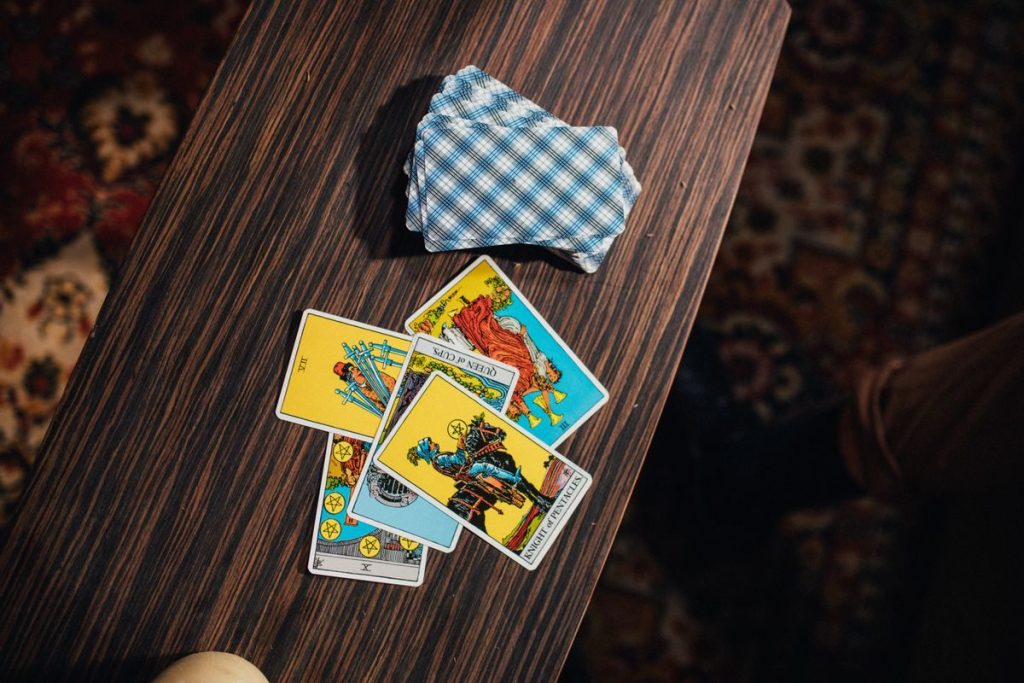
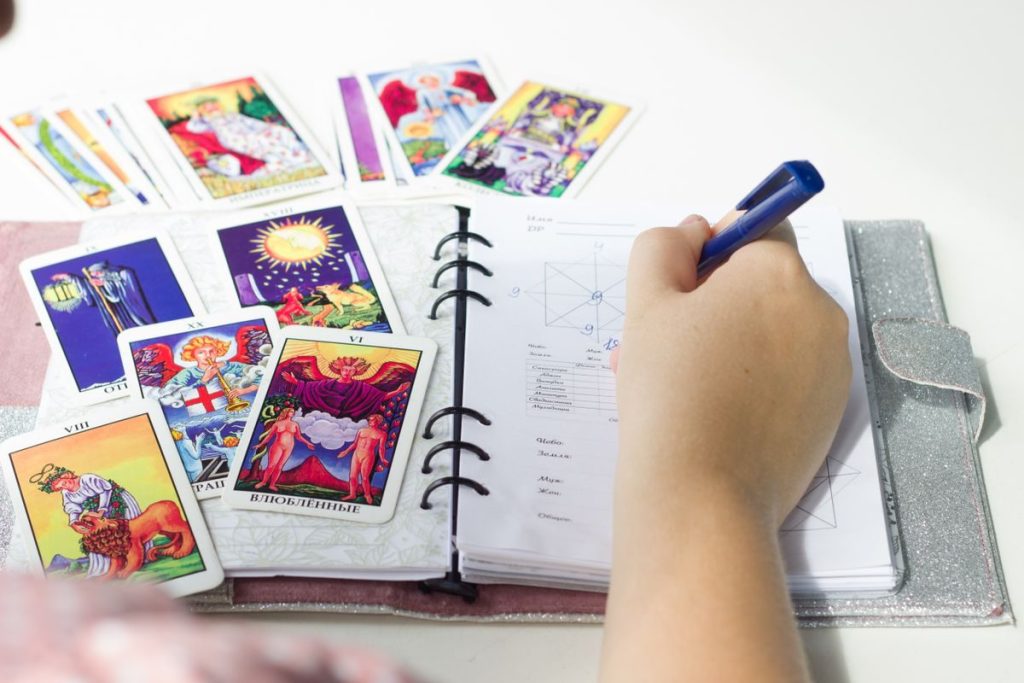
Most advice about tarot covers the reading itself: how to ask, which spread to use, what the cards mean. Very little covers the next part, which is where the value actually shows up. A reading you forget by dinner time doesn’t do much. A reading you write down, act on and check back on becomes a tool you can rely on. This guide covers the hour after a reading, the weeks after it, and what to do when the answer isn’t the one you wanted.
Right after the reading: write it down
Memory edits readings fast. Within a day, people tend to remember the card they liked and forget the one that stung. A quick record fixes that. You don’t need a beautiful journal, a notes app works fine. Capture five things:
- The date.
- The exact question as you asked it.
- The cards and positions, including reversals.
- One sentence summary of what the reading said.
- One action you’ll take, or one thing you’ll watch for.
Here’s what an entry might look like:
12 March. “Should I apply for the team lead role?” Situation: Eight of Pentacles. Obstacle: Five of Wands. Advice: Knight of Pentacles. Summary: I’ve done the work, the worry is about competition and conflict, the advice is to apply steadily and prepare well. Action: update CV this weekend, apply by Friday.
That entry takes two minutes and turns the reading into a plan.

Pick one action, not five
Readings often suggest several things at once. Trying to act on all of them is how a reading turns into vague good intentions. Look for the advice card, or the card that made you react most strongly, and choose one concrete step:
- Send the message you’ve been drafting.
- Book the conversation with your manager.
- Take a week off from checking their social media.
- Look at your bank statement before deciding on the purchase.
If a reading gives you no clear action, that’s useful too. It may be telling you to wait, which is an action of its own.
Give it time before asking again
The strongest temptation after a reading is to ask again, especially if the answer was uncertain. Repeating the same question an hour later rarely helps. You’ll get different cards, and now you have two readings pulling in different directions. A better rule:
- For daily or small questions, wait until the next day.
- For relationship or career questions, wait one to two weeks, or until something has actually changed.
- For big life questions, revisit after a month.
Our article on how often to get a tarot reading goes into this in more detail. If you need more depth now, ask a follow-up about the same cards instead. On Tarotell.me you can keep asking about the cards you drew, which avoids starting from zero.
When you didn’t like the reading
Unwelcome readings are common, and they’re often the most useful. Try these steps before dismissing one:
- Read the positions again. A scary card like the Tower in a “what you’re leaving behind” position is good news. Our guide to the Tower in a love reading shows how much position changes things.
- Separate warning from verdict. Most readers treat difficult outcome cards as “where this heads if nothing changes”, which means you have room to act.
- Ask what the card is protecting you from. The Three of Swords might be pointing to hurt you’d rather see coming.
- Check the advice card. Even hard readings usually contain a way forward.
If the reading leaves you anxious, step away from the cards for a while. Talk it through with someone you trust. Tarot should leave you clearer, not more frightened.
Check back in two to four weeks
This is the step almost everyone skips. Open your note and ask:
- Did the situation card describe things fairly?
- Did the obstacle show up the way the reading suggested?
- Did I take the action? What happened?
- Was the outcome card close to what unfolded?
Mark each reading with a simple score: helpful, partly helpful, not helpful. After ten readings you’ll see patterns. Maybe your love readings are sharp but your career readings are vague because your questions are vague. Maybe certain cards keep appearing, which our article on pulling the same card repeatedly covers.
Use the reading in conversations
A reading can be a good way into a conversation you’ve been avoiding. You don’t need to mention tarot at all. If the cards pointed to poor communication with your partner, open with what you noticed: “I feel like we haven’t really talked properly in a while.” The reading helped you name it; the conversation does the work.
Build on it with follow-up readings
When enough has changed, a new reading can pick up where the last one ended. Reference the old one in your question:
- “Last month the cards suggested I wait. Is now the time to reach out?”
- “I applied for the role. What should I focus on for the interview?” Our guide to job interview tarot has a spread for that.
This turns separate readings into a continuing story, which is how most experienced readers use tarot.
A simple after-reading template
| Field | Example |
|---|---|
| Date | 4 June |
| Question | Where is this relationship going over the summer? |
| Cards | Two of Cups / Seven of Cups / Ten of Cups |
| Summary | Real connection, some uncertainty about what we each want, good long-term potential |
| Action | Talk about summer plans together this week |
| Check-back date | 2 July |
| Result | (fill in later) |
If you’d like a starting reading to try this with, get a free tarot reading on Tarotell.me, or draw your free daily card and log it for a week.
Have a question on your mind? Ask it in your own words, choose your cards from the 1909 deck and get a free reading written for your situation.
Frequently asked questions
Should I keep a tarot journal?
A simple log is enough. Recording the question, cards and one action makes every reading easier to learn from.
What if the outcome card doesn’t come true?
Outcome cards describe a direction, not a promise. Check whether you or others changed something after the reading; that often explains the difference.
Can I ask the same question the next day?
For small daily questions, yes. For bigger ones, wait until the situation has moved, or ask a follow-up about the original cards.
How do I stop feeling anxious after a reading?
Focus on the advice card and one action. If anxiety persists, take a break from readings and talk to someone you trust.
Is it bad luck to ignore a reading?
No. A reading is information. You’re free to weigh it against everything else you know.