
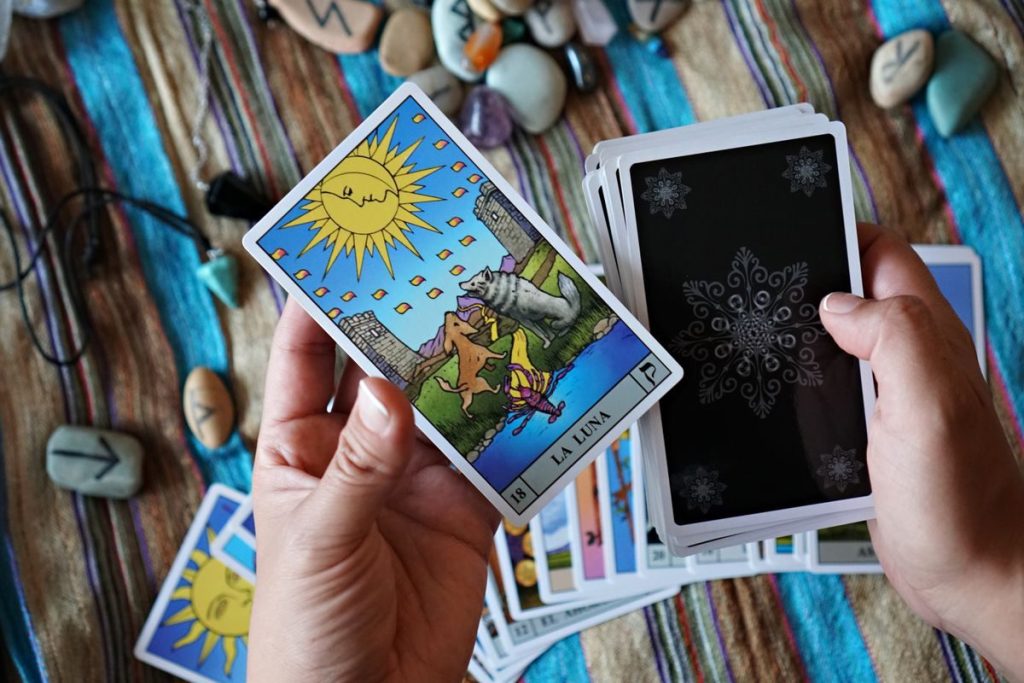
A card lands upside down in your yes or no reading. Does that flip the answer? Soften it? Delay it? Reversed cards are one of the most debated topics in tarot, and yes or no readings make the question sharper because you want a clear answer. This guide explains the main ways readers handle reversals in yes or no tarot, gives examples, and helps you pick an approach you can stick to.
Do you have to use reversals?
No. Plenty of readers never use them. If you shuffle so all cards stay upright, each card simply has one yes or no lean. That’s clean and easy, especially for beginners. Others use reversals because they add nuance like timing or obstacles. Both approaches work. What matters most is choosing one before you draw, so you don’t decide what a reversal means after seeing the card.
Method 1: Reversal flips the answer
The simplest method. Upright yes becomes no; upright no becomes yes.
- The Sun reversed: no.
- The Tower reversed: yes (you avoid the disaster).
It’s easy, but it can lose meaning. The Sun is so positive that many readers find “Sun reversed = no” too harsh.
Method 2: Reversal weakens or delays
The most popular method. A reversal keeps the card’s basic lean but adds a condition:
- Upright yes card reversed: “yes, but delayed”, “yes, with obstacles”, or “yes, if you deal with something first”.
- Upright no card reversed: “no, but improving”, “the worst is passing”, or “less bad than it looks”.
| Card | Upright | Reversed (Method 2) |
|---|---|---|
| Ace of Cups | Yes | Yes, but feelings are held back |
| Eight of Wands | Yes, quickly | Yes, but slower than you’d like |
| The Chariot | Yes | Yes, once you regain focus |
| Three of Swords | No | No, but the hurt is healing |
| Eight of Swords | No | No for now, but you’re getting free |
| The Devil | No | Breaking free, so yes to change |
Most of the yes or no meanings in our Major Arcana guide and Minor Arcana guide follow this method.
Method 3: Reversal means “look inward”
Some readers treat reversed cards as internal energy. A reversed card means the answer depends on something inside you: a fear, a belief, a readiness. The Knight of Wands reversed might mean “yes, if you stop holding yourself back”. This approach works well for personal growth questions.
Method 4: Reversal means “maybe”
A simple middle ground: any reversed card becomes a maybe, and you follow up with a fuller reading. It’s less precise but avoids overthinking. Our guide on what a maybe card means covers follow-ups.
Which method should you use?
- Beginners: skip reversals, or use Method 4.
- Most readers: Method 2 gives the best balance of clarity and nuance.
- Reflective, self-focused questions: Method 3.
- Quick, simple answers: Method 1, accepting it’s a bit blunt.
Whatever you choose, write it down and stick with it for at least a month. Switching methods mid-reading is the easiest way to end up with the answer you wanted rather than the one the card gave.
Examples with Method 2
- “Will I hear back about the job this week?” Eight of Wands reversed: yes, but it may take longer than this week.
- “Should I lend my friend money?” Six of Pentacles reversed: yes in principle, but the terms feel uneven. Set clear expectations first.
- “Is my ex coming back?” Ten of Swords reversed: no, but you’re recovering from the ending.
- “Should I go on the trip?” The Chariot reversed: yes, once you’ve sorted out the plan and your focus.
Reversed cards in love questions
Love questions produce a lot of reversals, partly because feelings are often hidden or blocked. Common examples:
- Two of Cups reversed: interest is there, but something needs repairing.
- The Lovers reversed: attraction without alignment; yes to feelings, maybe to the relationship.
- Knight of Cups reversed: sweet words without action.
More on this in yes or no tarot for love questions.
Shuffling for reversals
If you want reversals with a physical deck, you need some cards to end up upside down. Ways to do it:
- Spread the cards face down on a table and swirl them around, then gather them up.
- Split the deck in half, turn one half around, and shuffle them back together.
- Do this every few readings so reversals stay random.
Online and app readings handle this automatically. Tarotell.me reads cards upright or reversed and explains what the reversal means for your question. Try the free yes or no tarot.
Reversed cards in career and money questions
Reversals show up in work questions too, and Method 2 fits them well:
- Ace of Pentacles reversed: yes to the opportunity, but check the details or expect a slower start.
- Six of Wands reversed: success is possible, but recognition may be delayed or go to someone else first.
- Eight of Pentacles reversed: yes, if you put in more consistent effort.
- Five of Pentacles reversed: money worries are starting to ease.
For more career-specific readings, see free career tarot reading.
Keep a simple reversal log
If you’re new to reversals, keep a short log for a month: the question, the card, upright or reversed, the meaning you chose, and what happened. After a few weeks you’ll see whether your method is giving useful answers, and you’ll get faster at reading reversed cards without second-guessing.
Common mistakes with reversals
- Choosing the meaning after seeing the card. Decide your method first.
- Treating every reversal as bad. Reversed no cards often mean things are improving.
- Ignoring the card’s core meaning. A reversal changes the expression of a card, not what it’s about.
- Getting stuck. If you can’t make sense of a reversal, ask a follow-up or use a three-card spread.
Need a straight answer? Ask one clear question and draw a single card.
Frequently asked questions
Does a reversed card always mean no?
Not with most methods. Many readers treat a reversed yes card as “yes, but delayed” rather than no.
Is a reversed no card a yes?
Often it means “no, but improving” or “the worst is passing”, which can lean toward yes over time.
Should beginners use reversals?
It’s fine to skip them at first. Add them once you’re comfortable with upright meanings.
What’s the best method for yes or no reversals?
Method 2, where reversals weaken or delay the answer, is the most widely used and usually the clearest.
How do online readings handle reversals?
Good apps draw cards upright or reversed at random and explain the reversal in context.