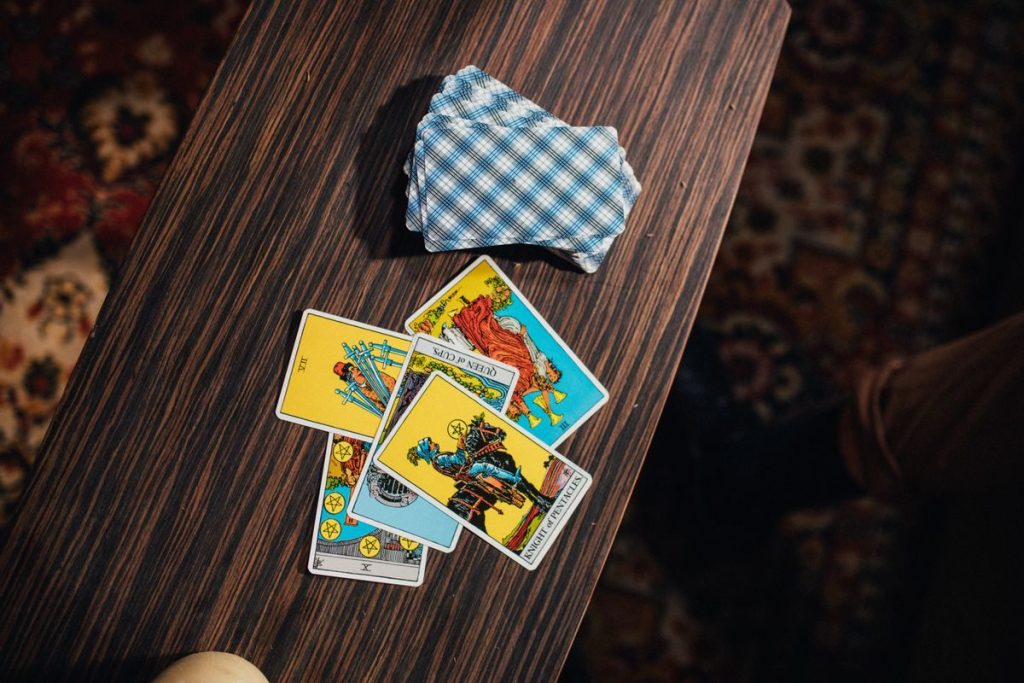

Stay or go. This job or that one. Move to the city or stay close to family. When you’re torn between two paths, a yes or no reading for each can leave you with two yeses or two nos and no clearer than before. A two options spread is built for exactly this. It lays out both choices side by side so you can compare them fairly. This guide gives you the spread, shows how to read it, and walks through examples.
Why a dedicated spread helps
Asking “Should I take Job A?” and then “Should I take Job B?” as separate readings causes problems. The second reading is coloured by the first, and the questions don’t share a common frame. A two options spread asks the same questions of both paths at once, so you’re comparing like with like.

The six-card two options spread
| Position | Option A | Option B |
|---|---|---|
| What this path offers | Card 1 | Card 4 |
| The challenge of this path | Card 2 | Card 5 |
| Where this path likely leads | Card 3 | Card 6 |
Add a seventh card in the middle, “what I need to know to decide”, if you want advice that sits above both options. Lay the cards in two columns so you can see them side by side.
Tarotell.me’s free tarot reading includes a “Two options” choice under Decisions, which sets up a comparison spread for you.
Before you draw: define the options clearly
Write each option down in one sentence before shuffling. “Option A: accept the offer at the agency in March. Option B: stay in my current role and ask for more responsibility.” Vague options (“change something” vs “don’t”) produce vague readings.
If there are really three options, run the spread with three columns. If one option is “do nothing”, that’s fine; it’s still a path with its own offers and challenges.
How to read the results
- Compare the outcomes first. Cards 3 and 6 show where each path is likely to lead. Is one clearly brighter?
- Then compare the challenges. Cards 2 and 5. One path might lead somewhere better but with a harder challenge. Ask which challenge you’re more willing to face.
- Look at what each offers. Cards 1 and 4. These often reveal what each option really means to you, beyond the practical facts.
- Check the suits. If one path is full of Pentacles and the other full of Cups, you’re weighing practical security against emotional fulfilment.
- Read the advice card last, if you drew one.
Example: two job offers
Option A: larger company, higher salary. Option B: smaller company, more creative freedom.
| Option A | Option B | |
|---|---|---|
| Offers | King of Pentacles (financial security) | Ace of Wands (creative spark) |
| Challenge | Four of Cups (boredom, feeling unfulfilled) | Two of Pentacles (juggling, less stability) |
| Leads to | Eight of Cups (wanting to leave later) | Six of Wands (recognition and success) |
Reading: Option A is secure but likely to feel empty, possibly leading you to leave anyway. Option B is less stable but leads to recognition. The deciding question is whether you can handle a period of financial juggling. If so, the cards lean toward B.
Example: move or stay
Option A: move to another city for a fresh start. Option B: stay near family and friends.
- A offers: The Fool (adventure, new beginning)
- A challenge: Five of Cups (homesickness)
- A leads to: The Star (renewal, hope)
- B offers: Ten of Pentacles (family, roots)
- B challenge: Eight of Swords (feeling trapped)
- B leads to: Four of Cups (restlessness)
Reading: Moving brings homesickness at first but leads to renewal. Staying offers comfort but a sense of being stuck. The cards lean toward moving, with a plan for staying connected to family.
Example: two relationships
Choosing between two people is emotionally heavy, and the spread can help, but be careful to look at your own feelings too. Add a card for “what I really want” in the middle. Love questions also benefit from our guides on relationship future readings and the Lovers as feelings; the Lovers card itself is traditionally about choosing between paths.
When both options look the same
Sometimes both outcomes look similar. That’s useful information: it suggests the choice matters less than you feared, or that what you do on either path matters more than which one you pick. In that case:
- Choose based on which challenge you’d rather face.
- Draw one more card: “What makes either path work?”
- Go with your gut. A tie in the cards often frees you to choose what you actually want.
When both look difficult
If both paths show hard cards, consider whether there’s a third option you haven’t named. Sometimes the cards are pointing out that both choices on the table are compromises. Our guide to maybe cards covers what to do when no answer is clear.
Common mistakes with two options readings
- Favouring one column. If you secretly want Option B, you may read its cards more generously. Read both columns with the same eye, or describe the cards to a friend without saying which option is which.
- Ignoring the challenge cards. A great outcome with a challenge you can’t handle isn’t a great choice.
- Re-running the spread. If the result disappoints, ask a follow-up instead of starting over.
- Skipping practical facts. Salaries, rent, contracts and commute times matter. Use the cards alongside them, not instead of them.
Combine with yes or no
Once the spread has helped you lean one way, a single free yes or no card can act as a final check: “Is Option B the right choice for me now?” Use it once, not repeatedly.
Need a straight answer? Ask one clear question and draw a single card.
Frequently asked questions
What is a two options tarot spread?
A layout that asks the same questions of two paths side by side, usually what each offers, its challenge and its likely outcome.
Can I use it for more than two options?
Yes. Add a column for each option. More than three gets hard to compare, so narrow the list first if you can.
What if both outcomes are good?
Then either choice can work. Choose based on the challenges and what feels right.
Should I use reversals in a two options spread?
It’s up to you. Reversals can show which path has more blocks or delays.
Can tarot make the decision for me?
It can clarify the trade-offs. The decision stays yours, alongside practical facts and advice.